
Gazing upon a sun-drenched city that seems to tumble down the sides of a deep gorge, it’s easy to feel a sense of awe-and a little overwhelm. With its breathtaking labyrinth of staircases connecting an upper and lower town, and a staggering collection of Baroque masterpieces, planning a journey through Modica, Sicily can feel like trying to solve a beautiful, intricate puzzle. You want to see it all, but you worry about missing the quiet moments and authentic flavours that truly define this unforgettable place.
Consider this your personal invitation to discover the city’s soul. We’re here to be your guide, moving beyond the checklist to reveal a clear, logical path through Modica’s splendour. Together, we will navigate the magnificent, UNESCO-listed churches, uncover the ancient Aztec secrets behind its famous chocolate, and find the hidden viewpoints that offer a moment of pure peace. Let us help you weave Modica into your Sicilian story, ensuring an experience that is as effortless as it is enchanting.
Why Visit Modica? A Tale of Two Tiers and Timeless Charm
Imagine a city carved into a deep gorge, a breathtaking cascade of honey-toned buildings tumbling down two steep hillsides to meet at the bottom. This is the unforgettable first impression of Modica, Sicily, a jewel of the Val di Noto and a designated UNESCO World Heritage site. Its dramatic beauty was born from tragedy; after a devastating earthquake in 1693 leveled the medieval town, it was reborn in a magnificent flourish of Sicilian Baroque. This profound story of resilience is central to understanding Modica’s history and heritage, which saw the city rebuilt not just with stone, but with unbridled creativity. To wander through Modica Sicily is to embrace an open-air theatre of grand staircases, hidden courtyards, and stunning views that unfold around every corner-a timeless invitation to get lost.
Understanding the Layout: Modica Bassa vs. Modica Alta
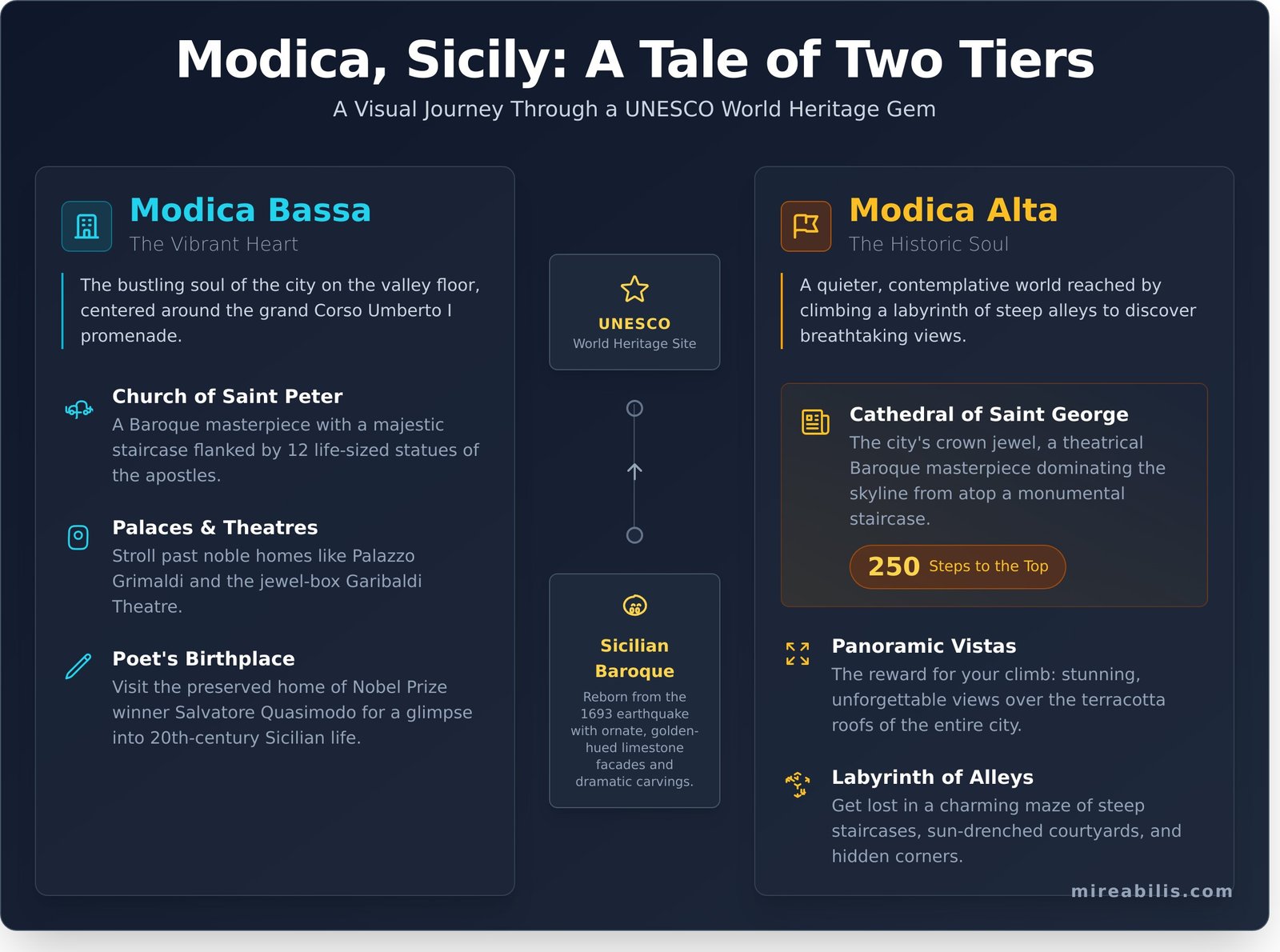
The unique character of Modica Sicily is defined by its two distinct tiers. Down in the valley floor lies Modica Bassa (Lower Modica), the vibrant and bustling heart of the city. Its main thoroughfare, Corso Umberto I, acts as a grand stage lined with elegant palazzi, tempting cafés, and the legendary workshops of the chocolatiers that make Modica Sicily famous. Ascending from this lively artery, you discover Modica Alta (Upper Modica), the city’s historic soul. This is a quieter, more contemplative world-a labyrinth of steep, winding alleys and sun-drenched homes. The climb is a rewarding pilgrimage, with each step revealing a more spectacular panoramic vista over the terracotta roofs below. The true magic of visiting Modica Sicily lies in the journey between these two worlds, a vertical exploration best savoured on foot.
The Spirit of Sicilian Baroque
The spirit of Modica Sicily is etched into its architecture, a triumphant expression of Sicilian Baroque. This is not a subtle style; it is a spectacle of grandeur and theatricality designed to inspire awe. Local architects used the warm, golden-hued limestone to create façades that are not merely walls but ornate canvases. Look closely and you will find them adorned with intricate carvings, playful cherubs, and the expressive mascheroni (grotesque masks) that peer down from balconies. The city’s churches, like the magnificent Cathedral of San Giorgio perched at the top of a monumental 250-step staircase, are masterpieces of this dramatic, emotional style, capturing the very essence of Sicilian passion and resilience.
The Unmissable Sights of Modica Bassa: Along the Corso Umberto I
Your journey into the soul of Modica, Sicily, begins in its vibrant lower town. Here, the magnificent Corso Umberto I unfolds like a storybook, a grand promenade that serves as the city’s beating heart. This is where daily life plays out against a backdrop of breathtaking Baroque architecture, a living theatre so remarkable that it is part of a collective UNESCO World Heritage site. As you stroll, the air fills with the sweet aroma of chocolate from historic confectioners, while elegant palazzi and storied churches command your attention. For fans of Italian television, these very streets will feel familiar beacuse, together with it’s sister UNESCO Heritage town of Scicli, few miles down the Irminio canyon, have been serving as the sun-drenched setting for the beloved ‘Inspector Montalbano’ series.
The Church of Saint Peter (Duomo di San Pietro)
Dominating the Corso, the Duomo di San Pietro makes an unforgettable first impression. Your eyes are immediately drawn to its majestic staircase, flanked by twelve life-sized statues of the apostles that seem to guide you toward the heavens. The church’s graceful, golden-hued facade is a masterpiece of Sicilian Baroque, while its interior houses a treasure trove of intricate stuccos, frescoes, and priceless artworks. A proud rival to the Cathedral of San Giorgio in Modica Alta, this church is a testament to the city’s enduring faith and artistic spirit.
A Walk Through History: Palaces and Theatres
The Corso is lined with the former homes of Modica’s nobility, each telling a tale of past splendor. Look for the imposing Palazzo Grimaldi, with its elegant portal, and the Palazzo della Cultura, which now hosts a civic museum. A short detour reveals the exquisite Garibaldi Theatre, a jewel box of 19th-century design that remains a cultural landmark. We invite you to slow your pace and look up; the ornate wrought-iron balconies are often supported by whimsical, grotesque figures known as mascheroni, a signature detail of the Val di Noto’s unique architectural style.
The Birthplace of a Poet: Casa Natale di Salvatore Quasimodo
Tucked away on a quiet side street is a more intimate cultural treasure: the birthplace of Nobel Prize-winning poet Salvatore Quasimodo. Now a small, lovingly preserved museum, his former home offers a poignant glimpse into Sicilian life in the early 20th century. It is a quiet, contemplative pause amidst the grandeur of the Baroque, a chance to connect with the literary soul of this extraordinary city and the powerful words it inspired.
Ascending to Modica Alta: A Journey to Breathtaking Views
The journey to Modica Alta is not a simple walk; it is an invitation to ascend, a slow pilgrimage through a living museum of stone and light. To truly understand the soul of Modica, you must climb… or bike. Each step up the winding staircases reveals a new, hidden corner: a sun-drenched courtyard, a balcony overflowing with geraniums, or a glimpse of the valley below. This is not a chore but a discovery, where the ultimate reward is the breathtaking panorama that awaits you at the top, setting the scene for the city’s most iconic landmark.
The Cathedral of Saint George (Duomo di San Giorgio): A Baroque Masterpiece
Dominating the upper town is the Duomo di San Giorgio, a theatrical masterpiece that seems to defy gravity at the top of a magnificent 250-step staircase. Its spectacular facade is a triumph of Sicilian Baroque, a style so significant it’s a key part of the Val di Noto’s celebrated UNESCO World Heritage site. Step inside to discover an elegant interior, where a fascinating meridian line is traced across the floor, designed to mark solar noon each day. We advise visiting at different times; the morning sun illuminates its facade, while the soft glow of dusk lends it an entirely different, unforgettable magic.
Exploring the Upper Town’s Churches
While the Duomo is the star, Modica Alta is dotted with other architectural jewels. Seek out the Church of San Giovanni Evangelista, whose own grand staircase and beautiful facade rival its more famous counterpart. The true joy, however, lies in the exploration. We encourage you to wander, to get delightfully lost in the labyrinthine streets where smaller, charming chapels and churches reveal themselves unexpectedly, each with a unique story to tell.
Finding the Best Viewpoints (Belvedere)
For the most iconic view, make your way to Pizzo Belvedere. From this vantage point, the entire city unfolds beneath you-a breathtaking tapestry of terracotta roofs, winding alleys, and golden-hued churches cascading down the two sides of the gorge. It is the postcard shot you have dreamed of. For photographers, this is the definitive spot to capture the city as the sun sets, bathing the Baroque stone in a warm, ethereal light. It is the perfect place for a moment of quiet reflection, gazing over one of Sicily’s most stunning urban landscapes.
The Taste of Modica: A Legacy of Chocolate and Savoury Delights
To truly understand Modica is to taste it. The city’s culinary identity is a rich tapestry woven from centuries of history, a deep respect for tradition, and the bounty of the Sicilian land. While world-famous for its unique chocolate, the gastronomy of Modica, offers a profound journey into a flavour landscape that is both rustic and refined, telling the story of its culture one unforgettable dish at a time.
The Legend of Modica Chocolate (Cioccolato di Modica)
The story of Modica’s chocolate is a journey through time, a legacy of the Spanish who brought an ancient Aztec recipe to Sicily in the 16th century. It is defined by its unique ‘cold-processing’ method, where cocoa is ground with sugar at a low temperature. This technique preserves the sugar crystals, giving the chocolate its signature granular texture and a pure, intense flavour. Beyond classic notes of cinnamon and vanilla, modern artisans create exquisite variations with local pistachio, sea salt, and even chili. A visit to a historic shop like Antica Dolceria Bonajuto for a tasting is an essential Modican pilgrimage.
Beyond Chocolate: Savoury Local Specialties
The city’s culinary heart beats with more than just cacao. The savoury dishes of Modica are a testament to authentic, peasant-style cooking elevated by exceptional local ingredients. Be sure to seek out these local treasures:
-
Cavatelli con sugo: Delicate, hand-rolled pasta shells perfectly designed to capture a rich, slow-simmered pork ragù-a true taste of a Sicilian Sunday lunch.
-
Scacce Modicane: A rustic, multi-layered stuffed flatbread, thin as parchment and filled with ingredients like tomato, onion, and salty Ragusano cheese.
-
Ragusano DOP: A noble, stretched-curd cheese with a history as rich as its nutty, piquant flavour, often aged for months and enjoyed on its own or grated over pasta.
Where to Eat: From Trattorias to Fine Dining
Modica’s dining scene is as layered as its architecture. For an authentic experience, wander the winding alleys to discover a family-run trattoria serving time-honoured recipes with genuine warmth. For a more sophisticated evening, the city is also home to Michelin-starred restaurants where visionary chefs reinterpret Sicilian tradition with culinary artistry. And there is no better way to begin an evening than with an aperitivo in Modica Alta, sipping a crisp local wine as the sun sets over the breathtaking baroque rooftops.
From a simple, perfect plate of pasta to a complex tasting menu, Modica offers a feast for the senses. Let us craft a bespoke culinary journey through Modica for you. Start planning your trip.
Experiencing Modica Like a Local: A Mireabilis Guide
To truly experience Modica is to move beyond a checklist and embrace its languid rhythm. It’s about savouring a morning espresso in a sun-drenched piazza, losing yourself in the labyrinth of stone stairways that connect Modica Bassa and Modica Alta, and allowing the city to reveal its secrets one discovery at a time. This is an invitation to slow down and immerse yourself in one of Sicily’s most captivating destinations.
Best Time to Visit and How Long to Stay
We believe the shoulder seasons of spring (April-June) and autumn (September-October) offer the most enchanting experience. The Mediterranean sun is warm but gentle, perfect for wandering without the intensity of summer crowds. To absorb the city’s dual character, we recommend at least two full days. For a truly decadent trip, plan your visit around the Madona Vasa-Vasa Festival (Easter), the Feast of san Giorgio or Madona delle Grazie (April), the Feast of San Pietro (June) or Modica Summer Fest (summer long) and, of course, the ChocoModica festival (usually in autumn), an unforgettable celebration of the city’s famous ‘food of the gods’.
Beyond Modica: Exploring the Baroque Triangle
The strategic location of Villa Mireabilis, Scicli makes it the perfect, elegant base for exploring the Val di Noto’s Baroque Triangle: Sicli, Modica and Ragusa. While sharing a UNESCO heritage, each town has its own soul. Discover the dramatic hilltop perch of Ragusa Ibla or the cinematic, sun-bleached streets of Scicli, well knwon from the famous TV series, Comissario Montalbano. Beyond the towns, the adventure continues, from the golden sands of the coast that can be explored also from the sea aboard our private yacht, to the tranquil countryside masserie (farm estates) that dot the landscape on a picturesque e-bike ride.
The Mireabilis Approach: A Curated Journey
A typical visit might scratch the surface, but a bespoke journey allows you to connect with the heart of Modica. Imagine bypassing the crowds for a private, hands-on chocolate-making class with a master artisan, or gliding through the breathtaking Hyblaean countryside on a guided e-bike tour to discover ancient mills. With us, you uncover the stories behind the stone, finding the secluded courtyards and family-run trattorias hidden from the typical tourist path. This is travel designed around you-personal, authentic, and unforgettable.
Ready for an unforgettable Sicilian adventure? Let’s create your bespoke holiday.
Your Modica Story Awaits
Modica is a city of captivating contrasts, a place where magnificent Baroque cathedrals ascend towards the sky and the rich, ancient aroma of Aztec chocolate drifts through sun-drenched alleyways. From the vibrant energy of Corso Umberto I to the serene, panoramic views from its upper tier, the true soul of Modica, reveals itself to those who wander its historic stairways with an open heart.
But to truly uncover its secrets requires more than just a map. Imagine exploring this UNESCO World Heritage jewel with an expert guide, following a personalised itinerary crafted entirely around your passions. Based locally in nearby Scicli, we provide that authentic, insider access that transforms a holiday into an unforgettable memory. We believe in creating bespoke journeys, not one-size-fits-all tours.
Are you ready to write your own chapter in this city of splendour? Your Sicilian story begins here. Let’s design your bespoke journey.
Frequently Asked Questions About Modica
How do you get to Modica?
The nearest airports are Catania (CTA) and Comiso (CIY). The most rewarding way to arrive is by car, a scenic 90-minute drive from Catania that immerses you in the island’s coastal landscape. A vehicle offers the freedom to explore the Val di Noto at your own pace. For a truly seamless beginning to your journey, a bespoke private transfer can be arranged, allowing you to simply relax and anticipate the beauty that awaits you in the heart of Sicily.
Is Modica a very touristy city?
Modica strikes a beautiful balance. While celebrated for its UNESCO-listed wonders, it preserves an authentic, lived-in soul far removed from the throngs of mass tourism like Taormina or Palermo. You will discover a vibrant local life unfolding against a backdrop of breathtaking architecture. It offers a genuine escape into the Sicilian spirit, especially outside of peak season, allowing for a more personal and peaceful exploration of its hidden courtyards and historic streets.
How difficult is it to walk around Modica?
Exploring Modica is a vertical adventure. The city is famously split into a lower, flatter section (Modica Bassa) and a higher, steeper part (Modica Alta), connected by a labyrinth of picturesque staircases. While navigating the inclines requires some effort, each step rewards you with stunning new perspectives and unforgettable views. However, the cascading levels of this beautiful city can also be explored with our e-bikes.
What is Modica best known for?
Modica is world-renowned for its exquisite Baroque architecture and its unique, ancient-style chocolate. As a UNESCO World Heritage site, its skyline is dominated by magnificent churches, like the Cathedral of Saint George, that climb dramatically up the hillside. Equally famous is its ‘cioccolato di Modica,’ a granular, aromatic chocolate crafted using a traditional cold-press technique. A visit is incomplete without tasting this historic local delicacy.
How many days do you need to see Modica properly?
While the main highlights of Modica can be discovered in one full day, we believe two to three days allows for a deeper connection. This unhurried pace gives you the time to wander beyond the main sights, get lost in quiet alleyways, savour long meals, and truly absorb the city’s enchanting rhythm. It can also be bundled together with the other Baroque jewels of the Val di Noto, like Ragusa and Scicli, the sea coast and the rugged canyons all around.
I enjoy meeting utile info, this post has got me even more info! .
its great as your other articles : D, thankyou for posting.