
Standing before a Sicilian menu can feel like deciphering an ancient, delicious scroll. The sheer, glorious variety of Sicilian dishes is a testament to its layered history, but it can leave even the most seasoned traveler wondering: how do you find the trattoria whispered about by locals, not just the one crowded with guidebooks? How do you distinguish a true taste of the island from a fleeting tourist fantasy, ensuring you don’t miss a single unforgettable flavor?
Consider this your personal invitation-a bespoke guide to the island’s culinary soul. We will journey beyond the menu, uncovering the stories behind iconic dishes from the bustling markets of Palermo to the quiet kitchens of the countryside. You’ll gain more than just a list of ‘must-eats’; you will discover the confidence to order like a local, understand the heart of Sicilian hospitality, and truly taste the unforgettable flavors that define this sun-drenched land. Your authentic adventure begins here.
Key Takeaways
-
Discover how Sicily’s layered history has crafted a culinary identity entirely its own, setting it apart from mainland Italy.
-
Embrace the rhythm of a true Sicilian day by learning the cherished rituals behind each meal, from a morning granita to a leisurely dinner.
-
Navigate the vibrant world of Sicilian food food with a curated guide to the island’s most iconic savory dishes and the unforgettable stories behind them.
-
Indulge your senses by exploring Sicily’s legendary dessert traditions and pairing them perfectly with unique wines born from volcanic slopes and sun-drenched coasts.
Table of Contents
The Soul of Sicilian Cuisine: A Crossroads of Flavor
To understand Sicily is to taste it. Far from a mere regional variation of mainland Italian cooking, the island’s cuisine is a world unto itself-a vibrant, sun-drenched narrative told through unforgettable flavors. Every dish whispers stories of conquest, trade, and the enduring connection between the land and its people. This is the heart of the true sicilian food experience, born from the tradition of cucina povera (peasant cooking), where humble, hyper-local ingredients are transformed with genius and passion into something truly extraordinary.
A Taste of History: The Influences on Your Plate
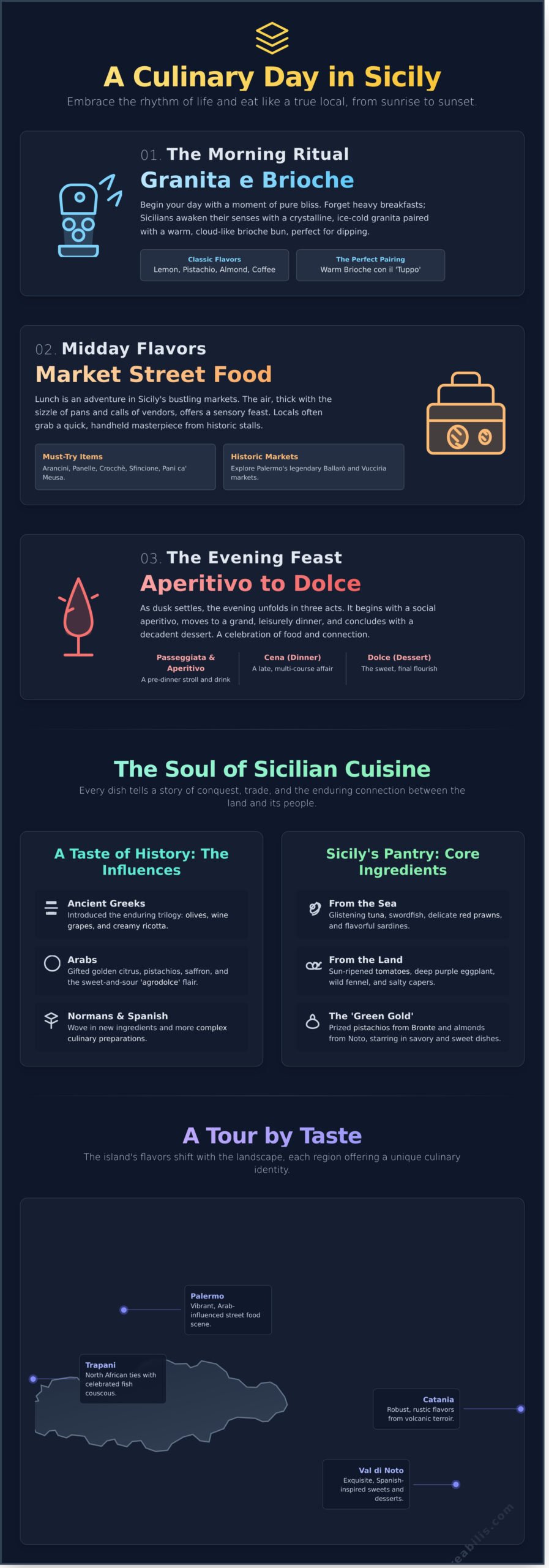
Your plate is a delicious mosaic of the past. The island’s strategic position in the Mediterranean has welcomed waves of settlers, each leaving an indelible mark on its culinary identity. The Ancient Greeks introduced the enduring trilogy of olives, grapes for wine, and creamy ricotta. The Arabs followed, gifting Sicily its golden citrus groves, prized pistachios, saffron, and the iconic sweet-and-sour ‘agrodolce’ flair. Later, the Normans and Spanish introduced new ingredients and more complex preparations, weaving another layer into the rich and fascinating history of Sicilian cuisine.
Sicily’s Pantry: The Core Ingredients
Sicily’s pantry is a treasure trove, blessed by a fertile volcanic soil and the bounty of the surrounding seas. The island’s cooks draw from an abundance of fresh, seasonal gifts to create their magic. This fusion of land and sea is at the core of every authentic meal.
-
From the Sea: The daily catch brings glistening tuna and swordfish, delicate red prawns (gambero rosso), and humble, flavorful sardines.
-
From the Land: Sun-ripened tomatoes, deep purple eggplant, wild fennel, and salty capers form the foundation of countless classic dishes.
-
The ‘Green Gold’: Prized pistachios from Bronte and almonds from Noto are Sicily’s jewels, starring in everything from savory pestos to divine pastries.
A Tour by Taste: Regional Culinary Differences
This journey of taste is not uniform; the island’s flavors shift with the landscape. Palermo, the vibrant capital, buzzes with an Arab-influenced street food scene that is a feast for the senses. To the east, beneath the shadow of Mount Etna, Catania offers more robust, rustic flavors shaped by its volcanic terroir. In the west, Trapani reveals its close ties to North Africa with its celebrated fish couscous. And in the southeast, the baroque towns of the Val di Noto tempt with exquisite, Spanish-inspired sweets and desserts. Each region offers a bespoke taste of incredible diversity.
A Sicilian Day in Dishes: How to Eat Like a Local
In Sicily, food is the rhythm of life. It’s a language of love, a reason for gathering, and a daily celebration of the island’s incredible bounty. To truly understand the soul of the Sicilian food, you must embrace its daily rituals, from the first sweet taste of morning to the lingering flavors of a late-night feast. This is more than a meal plan; it’s an invitation to experience a day steeped in tradition, connection, and unforgettable taste.
The Morning Ritual: Granita e Brioche
Forget everything you know about breakfast. In the Sicilian summer, the day begins with a moment of pure, refreshing bliss: granita e brioche. This is not sorbet; granita has a distinct, crystalline texture that melts on the tongue, crafted from simple, pristine ingredients. Classic flavors like bright lemon, rich pistachio, toasted almond, or bold coffee are served in a glass, accompanied by a warm, cloud-like brioche bun crowned with a sweet topknot, the ‘tuppo’. The ritual is to tear off pieces of the brioche and dip them into the icy granita-a sublime contrast of temperatures and textures that awakens the senses.
Midday Flavors: Market Street Food and Light Lunches
As the sun climbs, the city’s heart beats loudest in its ancient street markets, like Ballarò and Vucciria. This is where lunch becomes an adventure. The air is thick with the calls of vendors and the sizzle of pans, offering a feast for the senses. While a long, leisurely lunch is always an option, many locals opt for a quick, handheld masterpiece. The vibrant chaos of the markets is a living museum, showcasing the diverse culinary influences on Sicilian food from centuries of Arab, Norman, and Spanish rule. It’s a testament to the island’s history, served one delicious bite at a time.
The Evening Feast: From Aperitivo to Dolce
As dusk settles, the place transforms. The evening begins with the cherished passeggiata, a gentle stroll through the town piazzas, which flows seamlessly into the aperitivo hour. This pre-dinner drink, often a spritz or a glass of local wine accompanied by small bites, is a social prelude to the main event. Dinner itself is a grand affair, enjoyed late and at a leisurely pace. It’s a multi-act performance-starting with antipasto (appetizers), moving to a primo (pasta), followed by a secondo (meat or fish), and culminating in dolce (dessert). This is where family and friends reconnect, sharing stories and laughter long into the warm Mediterranean night.
Ready to immerse yourself in this delicious daily rhythm? Experience a truly authentic Sicilian meal with a local chef.
The Icons of Sicily: Must-Try Savory Dishes
To truly understand Sicily, you must taste it. The island’s history-a tapestry woven with Greek, Arab, Norman, and Spanish threads-is served on every plate. This journey into the heart of the Sicilian food begins with its savory icons, dishes that are not merely sustenance but a passionate expression of culture and tradition, perfected over centuries.
Street Food Stars
In Palermo, the streets are the kitchen. Here you’ll find golden orbs of saffron-infused rice called arancine, filled with a molten core of rich ragù and mozzarella. Nearby, vendors stuff soft sesame buns with a symphony of textures: the crisp, salty chickpea fritters (panelle) and creamy potato croquettes (crocchè). And you cannot miss sfincione, a thick, spongy, focaccia-like pizza topped with a savory-sweet sauce of tomato and onion, anchovies, and a dusting of caciocavallo cheese.
Perfect Primi: Unforgettable Pasta
Sicilian pasta is a revelation. From Catania comes Pasta alla Norma, a culinary aria of fried eggplant, vibrant tomato sauce, and salty ricotta salata. Palermo’s signature, Pasta con le Sarde, is a bold fusion of fresh sardines, wild fennel, pine nuts, and raisins-a taste of the island’s Arab-Norman past. From the west, try Busiate al Pesto Trapanese, where corkscrew pasta perfectly catches a bright, uncooked pesto of almonds, fresh tomatoes, and basil.
Stunning Secondi: The Best of Land and Sea
The main courses celebrate the island’s bounty. Pesce Spada alla Ghiotta features a meaty swordfish steak simmered in a "greedy" sauce of tomatoes, briny capers, and olives. For a more elegant preparation, Involtini di Pesce Spada are delicate swordfish rolls filled with breadcrumbs, pine nuts, and herbs. No exploration of Sicilian food is complete without Caponata. This iconic sweet and sour eggplant stew is a complex dance of flavors and the perfect accompaniment to any meal. Try it in a cannolo biscuit.
Each of these savory dishes tells a story of the island’s soul. But the journey doesn’t end here. After indulging in these rich flavors, one must save room for the island’s other culinary treasures, the equally famous traditional Sicilian desserts that offer a perfect, sweet conclusion to any meal.
The Sweet Side of Sicily: A Legacy of Decadent Desserts
In Sicily, dessert is never an afterthought; it is a profound art form, a sweet narrative of the island’s layered history. This world-famous pastry tradition was born in the quiet cloisters of convents and the opulent kitchens of aristocratic families, where recipes were perfected over centuries. The island’s sun-drenched bounty provides the essential palette: heavenly fresh ricotta, prized local almonds, and jewel-toned candied fruits. To truly understand the soul of Sicilian food is to surrender to its decadent sweet finale, an unforgettable journey for the senses.
Cannoli: The King of Sicilian Pastries
Forget everything you thought you knew about cannoli. The authentic Sicilian version is a revelation. It begins with a crisp, bubbled pastry shell, fried to a delicate golden-brown and, crucially, filled only moments before you take your first bite. This preserves the essential crunch that gives way to a luscious, creamy heart of sweetened sheep’s milk ricotta. While the classic is divine, variations invite further discovery:
-
Candied orange peel or cherry for a touch of sweetness
-
A dusting of bright green Bronte pistachios
-
Rich, dark chocolate drops for added decadence
Cassata Siciliana: A Baroque Masterpiece
The Cassata is the island’s celebratory cake, a stunning mosaic of flavor and history. This ornate creation, with origins tracing back to the Arab emirs, is a true baroque masterpiece. A round of delicate sponge cake is moistened with liqueur and layered with the same sweet ricotta found in cannoli. The entire cake is then encased in a smooth layer of marzipan, often dyed a brilliant pistachio green, and lavishly decorated with intricate patterns of candied fruit. It is incredibly rich, a slice of pure Sicilian indulgence.
Frutta Martorana and Other Almond Treats
Step into any Palermo pasticceria and you will be greeted by dazzling displays of Frutta Martorana. These are not fruits, but exquisite marzipan sweets, handcrafted and painted to perfectly mimic tiny peaches, lemons, figs, and more. This edible art form was invented by the nuns of the Martorana convent and remains a beloved tradition for holidays, especially All Souls’ Day. Alongside them, you’ll find an array of other almond-based pastries, each a testament to the enduring importance of this cherished ingredient in the culture of Sicilian food.
What to Drink in Sicily: Wines of Fire and Sea
A journey through the world of Sicilian food is incomplete without exploring its remarkable drinks. Once known for mass-produced table wine, Sicily has blossomed into one of Italy’s most dynamic and thrilling wine regions. Its soul is captured in bottles born from a unique terroir-a fusion of volcanic fire from Mount Etna, sun-drenched coastal plains, and salty sea breezes. A passionate resurgence of indigenous grape varieties means every glass tells an authentic story of this incredible island.
Wines from the Volcano: Etna DOC
On the dramatic, high-altitude slopes of Mount Etna, winemakers practice heroic viticulture. The black, mineral-rich volcanic soil yields wines of extraordinary character. Seek out whites made from the Carricante grape for their crisp acidity and flinty notes, and discover the elegant, Burgundy-esque reds crafted from Nerello Mascalese, offering delicate aromas of red berries and spice. Wines like Sabbie dell’Etna, red and whites alike, are probably the driest and most mineral wines you’ll ever taste. Pure heaven… and volcanic earth.
Island Classics: Nero d’Avola and Beyond
Sicily’s most celebrated red grape, Nero d’Avola, produces bold, ruby-red wines bursting with dark fruit and warm spice-the perfect companion to hearty Sicilian dishes. Assembled with another famous local grape, the Frappato, will give you Cerasuolo di Vittoria, and Valle dell’Acate or Donnafugata stand tall on the world stage. For a taste of the Mediterranean sun, try a crisp white like Grillo, Inzolia or Catarratto, whose bright citrus and saline notes are a sublime match for fresh seafood. And for a sweet finale, the island offers liquid gold:
-
Marsala: A fortified wine with a rich history and complex, nutty flavors.
-
Passito di Pantelleria: A luscious dessert wine made from sun-dried Zibibbo grapes.
-
Malvasia: An aromatic sweet wine, often from the Aeolian Islands.
Digestivi and More
After a generous meal, Sicilians often turn to a digestivo to settle the stomach. An Amaro Siciliano offers a bittersweet blend of local herbs, while a chilled glass of homemade Limoncello provides a bright, zesty finish. And of course, there is coffee. Embrace the local ritual by ordering un caffè al banco-a quick, potent espresso enjoyed while standing at the bar, the true Italian way.
To truly understand the soul of Sicilian viticulture, nothing compares to experiencing it firsthand. Let us arrange a private tasting at one of Sicily’s finest vineyards.
Your Sicilian Culinary Adventure Awaits
From the sun-drenched markets of Palermo to the volcanic vineyards of Etna, Sicilian cuisine is a story told through flavor. We’ve journeyed through a day of local dishes, celebrated iconic savory plates like arancini and pasta alla Norma, and indulged in the sweet legacy of cannoli and cassata. As we’ve discovered, the world of Sicilian food is a vibrant tapestry woven from centuries of history, passion, and the island’s incredible bounty. It’s more than a meal; it’s an invitation to experience the very soul of the Mediterranean.
But to read about these flavors is only the beginning. To truly understand them, you must taste them at their source. Ready to taste the real Sicily? Design your bespoke culinary adventure with Mireabilis. We curate unforgettable journeys, from private cooking classes with local chefs to exclusive visits to family-run farms and wineries. Let us welcome you to the table. Your unforgettable journey into the heart of Sicilian flavor begins here.
Frequently Asked Questions About Sicilian Food
What is a typical Sicilian breakfast?
In Sicily, breakfast is a simple yet delightful ritual. The most common start to the day is a fresh, flaky cornetto (the Italian cousin of the croissant) paired with a perfectly crafted cappuccino or a strong espresso. During the warm summer months, locals embrace a truly iconic treat: a scoop of refreshing lemon, almond or coffee granita served with a soft, sweet brioche bun known as brioche col tuppo, perfect for dipping.
Is food expensive in Sicily, Italy?
You will find that the cost of Sicily Italy food is wonderfully accessible, offering exceptional value. Street food delicacies like an arancina or a panelle sandwich can be enjoyed for just a few euros. A delicious meal at a family-run trattoria, complete with pasta, a main course, and wine, is often significantly less expensive than in other parts of Italy or Europe. While upscale ristorantes exist, enjoying the island’s authentic culinary treasures is a truly affordable adventure.
Do I need to tip at restaurants in Sicily?
Tipping is not a standard practice or expectation in Sicily, as service charges (servizio) are often included in the bill. You may also see a small cover charge (coperto) per person, which covers bread and table settings. While not required, leaving a few extra euros or rounding up the bill for exceptional service is always appreciated as a gracious gesture. It is a personal choice rather than a cultural obligation, allowing you to relax and simply enjoy the meal.
What are some must-try vegetarian dishes in Sicily?
The island’s cuisine celebrates its bountiful produce, making vegetarian Sicily Italy food a feast for the senses. An absolute must-try is Pasta alla Norma, a sublime dish of pasta with fried eggplant, rich tomato sauce, and salted ricotta. Another classic is caponata, a sweet and sour vegetable stew. Don’t miss out on street food delights like chickpea fritter sandwiches (pane e panelle) or the diverse array of vegetable side dishes (contorni).
What is the difference between a trattoria, osteria, and ristorante?
Navigating Sicily’s charming culinary landscape is easy once you know these terms. A ristorante is the most formal option, offering a broad menu, extensive wine list, and professional service. A trattoria is typically a more casual, family-run establishment serving traditional, rustic dishes. An osteria was historically a simple wine tavern serving small plates, but today the term is often used interchangeably with trattoria to signify a place of authentic, heartfelt cooking.
Can I drink tap water in Sicily?
Yes, the tap water (acqua dal rubinetto) throughout Sicily is potable and perfectly safe to drink. It undergoes rigorous treatment and quality control to meet European standards. However, many locals and visitors prefer the taste of bottled water, which is readily available as either still (naturale) or sparkling (frizzante). While you can certainly drink from the tap, ordering bottled water at restaurants is the common and expected custom on the island.